

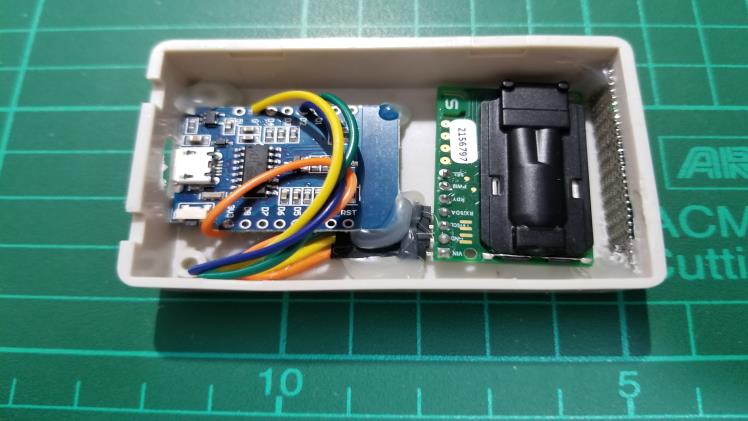
A CO2 sensor is a device that measures the presence of CO2 in a room or area. The gas is colorless and odorless, but its presence in a room can be a proxy for ventilation. It helps to reduce the number of bacteria and viruses in a room or area, and can also be used to warn employees to stay out of enclosed areas.
CO2 is odorless and colorless
Despite being odorless and colorless, carbon monoxide can be fatal when a large amount builds up in the air. Many buildings and homes rely on systems that produce CO2, and they may not have enough safety features to keep the CO2 from escaping. As a result, people may not know that they’re breathing in dangerous levels of CO2 unless they have a co2 sensor alarm. According to the Centers for Disease Control, over 400 Americans die from CO2 poisoning each year and more than 20,000 seek medical treatment after experiencing the symptoms.
Carbon dioxide is a colorless gas that is produced naturally and through human activity. It has a slight acidic taste, and is nonflammable. It can also be found as a solid, called Dry Ice, which sublimes to gas at -78 degC. Carbon dioxide is a common combustion product.
It is a proxy for ventilation
The presence of carbon dioxide (CO2) in a building’s air is an indicator of its ventilation levels. Poor ventilation can lead to elevated CO2 concentrations inside a building, making it a potential source for the transmission of diseases. A CO2 sensor can help buildings assess their ventilation levels and recommend measures to improve ventilation.
The concentration of CO2 increases with the number of people, occupancy and variation in ventilation. By detecting the presence of CO2, an indoor space can be deemed habitable and the risk of transmission of infections is reduced. In fact, CO2 measurements are a useful proxy for ventilation, but they should not be taken as an exact measurement of ventilation.
When indoor air is well ventilated, the concentration of carbon dioxide is similar to the levels found outdoors. As a rule of thumb, a room with at least 1,000 ppm of CO2 is a suitable ventilation level. However, if the CO2 concentration is above this level, other ventilation equipment may be necessary.
It reduces the number of viruses and bacteria in a space
Researchers are using CO2 sensors to reduce the number of viruses and bacteria in indoor spaces. The findings can be used to develop and apply building-scale optimization strategies for public health. The sensors can help prevent the spread of SARS-CoV-2 virus, other viral infections, and seasonal flu. The study is published on the medical research website.
Researchers used commercially available carbon dioxide monitors to evaluate indoor air quality. These devices cost a few hundred dollars. The researchers then confirmed the accuracy of the devices in a laboratory. After examining the data, they developed a mathematical “box model” to estimate the number of viruses and bacteria in a room. However, the model does not consider the amount of air flow in a room, which requires a customized analysis for each room.
It can warn employees to stay out of enclosed areas
If you work in an enclosed space, a CO2 sensor can warn your employees to leave the area. These sensors are typically mounted near the point where the air is supplied to a work area. They can also be placed near piping systems or process vessels to warn employees of elevated CO2 levels.
CO2 is an extremely hazardous gas. Even when leaks don’t occur, it can build up dangerously in confined spaces. When a person feels any of these symptoms, he or she should exit the area and immediately go outside to get fresh air. While a CO2 leak is rare, the gas is dangerous at any level and poses a range of dangers beyond explosions. The Occupational Safety and Health Administration (OSHA) reminds employers to take precautions to ensure workers are protected from exposure to CO monoxide.
It increases energy efficiency
Installing a CO2 sensor in a building can improve ventilation and reduce energy costs. This sensor works by connecting to a smart HVAC system, which will adjust airflow based on CO2 levels. The sensor can also alert building occupants and workers when CO2 levels get dangerously high or low. These devices can even send notifications to mobile phones.
Conclusion
The CO2 sensor works by giving building managers and HVAC managers an accurate picture of the amount of CO2 in each room. With this information, facility managers can control the ventilation to maximize energy efficiency. This technique is called demand-driven ventilation, and it reduces the electricity bill and energy waste.
