

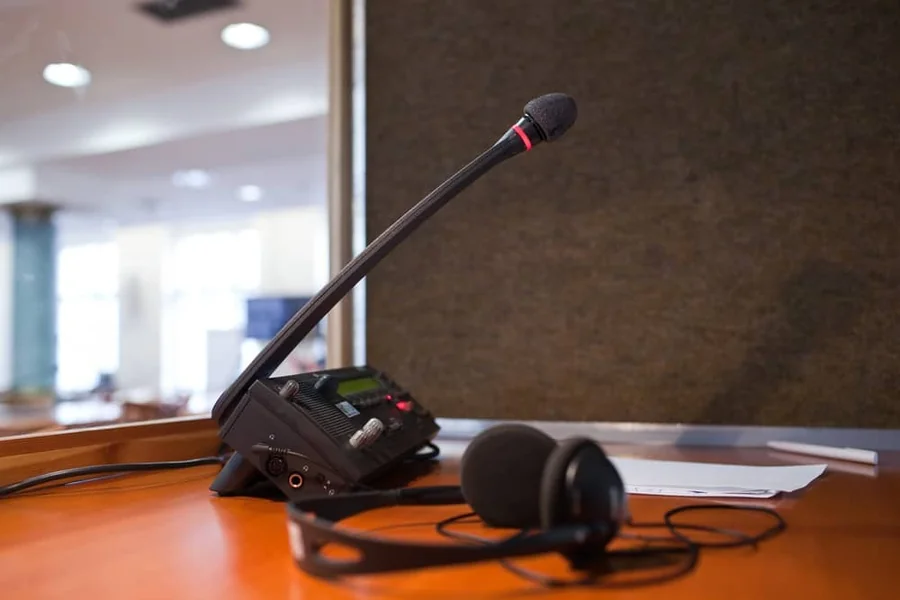
Simultaneous interpretation is a highly specialized field that requires not only linguistic excellence but also the right set of tools to deliver accurate and timely communication. Whether for international conferences, diplomatic summits, multilingual corporate meetings, or broadcast events, professional simultaneous interpretation relies heavily on robust, reliable equipment. Selecting the appropriate gear is paramount to maintaining audio clarity, minimizing latency, and ensuring the overall efficiency of multilingual communication.
This article provides a detailed guide on the essential components of a professional simultaneous interpretation system, the technical specifications to consider, and how to match your equipment choices to specific use cases.
Understanding the Technical Demands of Simultaneous Interpretation
Simultaneous interpretation involves real-time translation of speech into another language while the original speaker is still talking. This requires not only mental agility from interpreters but also ultra-low-latency audio transmission, excellent sound isolation, and flawless communication channels between the speaker, interpreter, and audience.
Unlike consecutive interpretation, simultaneous interpretation doesn’t afford pauses between the original and translated speech. As such, even a minor technical fault—such as microphone lag or channel interference—can disrupt the entire communication flow. Hence, choosing the right equipment is not just a matter of convenience but a critical factor for successful interpretation delivery.
Core Components of a Simultaneous Interpretation System
A professional simultaneous interpretation setup includes multiple interconnected hardware and software components. Below is a breakdown of the essential equipment:
| Component | Function | Technical Considerations |
| Interpreter Console | Interface used by interpreters to listen, speak, and control channels | Dual headphone input, relay channel selection, volume & mic controls |
| Headsets (Interpreter) | Ensures sound clarity for interpreters | Noise-canceling, over-ear, high fidelity |
| Microphones (Interpreter) | Captures interpreter’s voice with minimal background noise | Directional, gooseneck preferred |
| Booth (Soundproof) | Isolates interpreters from ambient sound and vice versa | ISO 4043 compliant, ventilation, ergonomic space |
| Transmitters | Sends the interpreter’s voice to the audience | Infrared or radio frequency with multi-channel support |
| Receivers (Audience) | Allows audience to listen in their preferred language | Channel selector, long battery life, compact size |
| Audio Mixer / Hub | Routes audio signals from interpreters to various output channels | Digital routing, feedback suppression |
| Software / Cloud Platforms | Enables remote or hybrid interpretation setups | Low-latency streaming, secure channels, multilingual UI |
Wired vs Wireless Systems: Making the Right Choice
When choosing between wired and wireless systems, the venue size, audience mobility, and security requirements come into play.
- Wired Systems are often used in permanent installations such as legislative chambers or press rooms, where stability and audio fidelity are crucial. They typically experience less interference and offer higher audio resolution.
- Wireless Systems, especially those using infrared (IR) or radio frequency (RF) transmission, are ideal for mobile events and large conference halls. IR systems are preferred for secure environments (e.g., legal or defense-related events) because the signal doesn’t pass through walls.
Example Use Case: A multilingual UN-style summit with multiple interpretation channels would benefit from an IR-based wireless system with individual audience receivers and ISO-certified interpreter booths.
Soundproof Booths: Mobile vs Permanent
Interpreter booths are often overlooked in basic setups, but they are central to ensuring audio quality and interpreter comfort.
- Permanent Booths are typically found in conference centers and require built-in ventilation, cable management, and ergonomic furniture.
- Mobile Booths conforming to ISO 4043 standards are ideal for traveling setups. They are modular, can be assembled on-site, and provide excellent acoustic isolation.
Recommendation: Always ensure booths meet the minimum standard for ventilation and noise insulation (at least 30 dB reduction).
Importance of Audio Quality and Latency
The most critical technical aspects of any simultaneous interpretation system are audio clarity and latency. The equipment must deliver crystal-clear audio to interpreters and audience members, without delay or distortion. In today’s era of Luxury Technology, where premium communication solutions are redefining global events, even milliseconds of lag or subpar sound can compromise the entire experience.
- Microphone frequency range should ideally cover 50 Hz to 15 kHz for voice clarity.
- Headsets must isolate background noise and reproduce natural speech tones.
- Transmission latency must be below 100 milliseconds to maintain speech synchronization.
Tip: Use digital audio processors with echo cancellation and automatic gain control to reduce listener fatigue.
Emerging Trends: Remote and Hybrid Interpretation
With the rise of remote work and global events, Remote Simultaneous Interpretation (RSI) has gained traction. In such setups, interpreters work from remote locations via cloud platforms, transmitting audio to event participants through streaming services or dedicated apps.
Key requirements for RSI include:
- Stable internet connection (minimum 10 Mbps dedicated)
- Redundant audio interfaces (USB + analog)
- Secure video conferencing platforms with interpreter channel support
- Cloud-based mixer and audio routing tools
While RSI adds flexibility and scalability, it also introduces risks like network jitter and dropped connections. To mitigate this, always use platforms designed specifically for simultaneous interpretation rather than generic video conferencing tools.
Maintenance and Redundancy Planning
Even the best equipment can fail if not properly maintained. Establishing a proactive maintenance schedule and incorporating redundancy into your setup is essential.
- Routine testing: Conduct pre-event checks for all hardware components.
- Spare units: Always have backup microphones, headsets, and receivers.
- Dual-channel recording: Record original and interpreted audio for compliance and quality review.
- Power backup: Use uninterruptible power supplies (UPS) for mission-critical components like interpreter consoles and mixers.
Final Checklist Before Procurement
Here’s a quick checklist to guide the selection process:
| Question | Consideration |
| Is the system scalable for multilingual or multi-room use? | Look for multi-channel support and modular architecture. |
| Is the audio latency acceptable? | Ensure end-to-end latency is below 100ms for interpreter comfort. |
| Can the system be integrated into AV or broadcast setups? | Choose systems with standard digital/analog audio outputs (XLR, AES/EBU, etc.). |
| Is interpreter comfort ensured? | Invest in ergonomic booths, headsets, and intuitive consoles. |
| Are remote capabilities required? | Select RSI-compatible systems with redundant internet and remote access options. |
Conclusion
Simultaneous interpretation is an indispensable part of modern multilingual communication, and the quality of interpretation hinges on the reliability and sophistication of the supporting equipment. From high-performance microphones and digital audio hubs to ISO-compliant booths and cloud-based RSI platforms, each component plays a critical role in maintaining seamless communication across languages.
Selecting the right simultaneous interpretation equipment should be driven by technical performance, venue requirements, interpreter ergonomics, and future-proofing for remote or hybrid formats. A thoughtful investment in this infrastructure ensures your events meet global standards and your audiences stay connected—no matter the language.
