

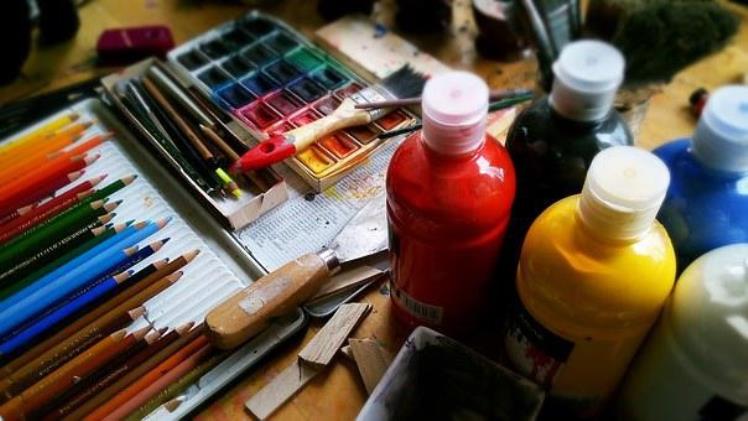
The life of an artist is nothing without a pencil. A pencil could be a toy to a pre-schooler, but it is a major tool for an artist. It might be small, but a pencil is valuable to an artist. As popular as it is, only a few know the history and other details about a pencil. Do you know how it is made? Do you the different types? Do you know the history of pencils? Then read on to discover more.
What is a pencil?
In simple terms, a pencil is a writing tool for writing on a block of wood or paper. It consists of a wooden body with a thin graphite or kaolin inside it. A pencil is used for mostly erasable markings or writing, not a permanent inscription. The protruding graphite tip can be sharpened when blunt by cutting off the wood in a way to expose the inner core. As a disposal writing tool, the pencil reduces each time it is sharpened. The mixture of graphite and kaolin determines the shade of dark colour it can produce.
Pencil Symbols
The most common pencils available today have markings of HB, HF, B or H with numbers. HB simply means hard and black. Pencils marked with B, B2, B3, B4, etc contain a larger amount of graphite. Pencils with H, H2, H3, H4, etc markings have a larger amount of kaolin.
Hard pencils are denoted with the letter “H” and are more suitable for technical drawings. “B” pencils are more suitable for artistic drawings since they are softer. They are over 20 different variations of artistic pencils available with inscriptions like EE, 12B, 8B, 7B, etc. the degree of hardness ranges from 1 to 4. While learning about pencils, you could take a breather by visiting the blackjack and checking out a few interesting games.
Types of pencils
Graphite pencils
This is one of the most common artistic pencils that contains a mixture of clay and graphite. This pencil allows the artist to draw real images with expressive lines and light guidelines. They are versatile and wear down a little faster since they are soft.
Solid graphite pencils
These are often referred to as woodless pencils and are mostly used for drawing and art. Unlike regular pencils, the solid graphite pencil does not have a wooden body. It consists of thick solid graphite.
Charcoal pencils
The charcoal pencil has a special quality of producing a high contrast and rich tones. They are usually more brittle and can easily smear on a surface. You can easily fade it or wipe it off a surface entirely. Charcoal pencils were more popular in the past. Painters like Michelangelo and Leonardo da Vinci were prominent for using it. They are different varieties of charcoal pencils such as white charcoal pencils, paper-wrapped charcoal pencils, and wooden charcoal pencils.
Liquid graphite pencils
With this type of pencil, you can create an authentic pencil effect and sketches using the liquid. It comes in different shades, such as blue, yellow, red, and grey. Derivan liquid pencil is one of the most popular. You apply this pencil using a nib or brush and thin it with water.
Coloured pencils
Coloured pencils are crayons. They can come in the form of chalk, charcoal or pastels. They are very common with children learning to colour objects. They are non-toxic and simple to use and often come in a variety of colours. Several artists create amazing art using this pencil.
Carbon pencils
The carbon pencils are a hybrid pencil. It is a mixture of graphite and charcoal. Carbon usually comes from two main sources which produce two distinct carbons. Carbon from charred wood is often hard, that is the source of the hard charcoal. Soft charcoal comes from burnt linens or vines. Either of these carbons is often mixed with graphite to produce carbon pencil.
Other pencils worthy of mention include grease pencils, watercolour pencils, mechanical pencils, and copying pencils / indelible pencils. Now you know, you can better identify a pencil the next time you see it.
