

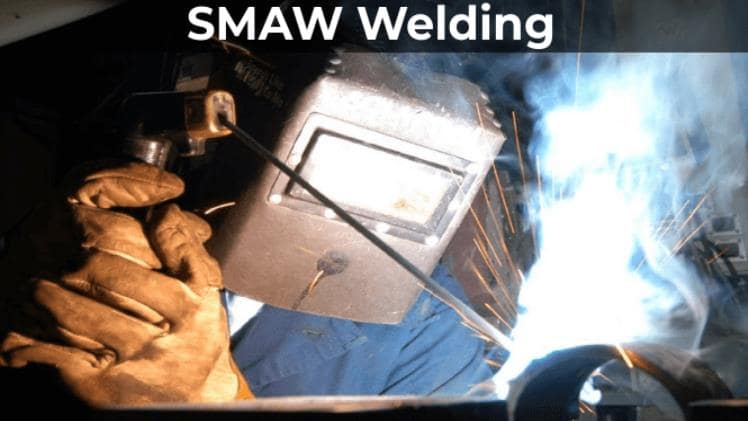
Electrical welding has evolved from welding with a non-fluxed wire rod. As a result, welds are brittle, porous, and the wire is attached to the workpiece during arcing. Later, the welding wire was developed to be more efficient. By using flux to cover the wire core Flux cladding can be done in a number of ways, including spraying, dipping, smearing and extrusion.
Note: Welding is a job with a high income potential for people working in this job. Especially with people with high welding skills. You can learn about electric and gas welding. And find more welding equipment at our website : https://www.udo.co.th/product/detail/yawata-316l-16
1. Function of Flux
The flux covering the wire core has several functions. which depends on the type of ingredients The main function of the flux when melting is to form gas and molten slag covering the weld metal. and other duties including
- Cover the molten metal with gas and flux generated by slag.
- Mixing chemicals and elements with the weld.
- Influences on arc, i.e. arc pointing, ionization, arc uniformity, arc voltage.
- Influence on weld shape.
- Allows Slag to be easily knocked out.
- Influencing the use of welding electrodes such as metal water flow, ability to weld out of position and electrodes, etc.
- Influence on penetration
- Add elemental mixture to the weld.
- Increase the rate of filling of weld meat.
- Control the chemical and mechanical properties of the weld.
- Control the hydrogen entering the weld.
- Influence on wire manufacturing processes such as extrusion capability.
2. Weld-metal Protection
When arcing, the flux covering the welding wire melts, covering the molten metal water. and prevent oxygen and nitrogen from entering the arc area When the slag hardens, it acts to cover the welds throughout. until the weld has cooled to room temperature Good flux must be covered with slag throughout the weld. And the slag must be easily knocked out before welding the weld over it. The imagination wanted the slag to come off on its own without knocking it out. During cooling the slag must remain covering the weld. To prevent the weld surface from being exposed to air and oxidation, the knock-out ability of slag depends on the influence of the flux mixture.
arc covering When the melting flux produces gas to cover the arc area. To reduce the danger of welds absorbing oxygen and nitrogen. which carbonate gives carbon dioxide gas Cellulose gives hydrogen and carbon monoxide gas.
3. Arc Stabilization
The need for a consistent arc has been discussed, meaning the need for a constant arc across the joint length. Unless the welder changes the arc to suit the nature of the joint. Uniform arc, i.e. arc must originate from the center cross-section of the wire rod. And the arc beam must be in line with the wire axis as well.
To connect the traces to V The arc beam will not deviate towards the trace wall towards the side near the end of the welding wire. The arc beam must remain in the direction specified by the welder. At the same time, the tip of the welding wire must be melted evenly and the metal water added to the melting pond will not deviate from the arc beam. Stability Another characteristic is that arcing is more prone to arcing at the beginning of the arc or bruising. At the start of each half cycle of alternating current
A uniform arc occurs in both characteristics. Because eons occur quickly at low forces. by adding elements that cause ions Such into the flux, including titanium oxide, potassium, silicate, and calcium carbonate. for silicates and oxides that are originally intended for other purposes and also help to provide an even arc.
4. Control of surface profile
Understand the role of flux controlling weld appearance. Determined from the surface tension of the melting pond If the water surface tension of the metal is high, it will get a convex melting pond. Because the metal water is difficult to flow. On the other hand, if the metal surface tension is low good water flow The surface of the melting pond is flat. The surface tension of the metal water is too high, not only bad for the weld surface. It also prevents the metal water from flowing into the V-joint trace evenly. In other words, if the surface tension of the metal water is too low, it will only lead to poor weld shape control. It also prevents the metal water from flowing into the V-joint trace evenly. In other words, if the surface tension of the metal water is too low, it will be difficult to control the weld shape and the size of the melt pool. And seriously, metal water will flow out of the weld onto the work urdughr surface without melting next to the workpiece (Overlap), so the surface tension of the metal must be suitable for use.
The surface tension of the molten metal water is controlled by the oxygen content. The flux with a large amount of oxygen, the resulting weld will also have a large amount of oxygen. If the flux has less oxygen content, the weld will have less oxygen content. The effect of oxygen content on weld appearance and weld strength. From the appearance of fillet welds that the weld has less oxygen content The surface tension of the metal will be very high. The resulting welds have high mechanical properties. On the other hand, if there is a large amount of oxygen The surface tension of the metal is small. The resulting welds are concave.
